Picture this: I’m standing in a cramped kitchen, the scent of burnt garlic already swirling in the air, when my phone buzzes with a friend’s dare—“Make the ultimate Caprese pasta and prove you’re the best cook in town.” I stared at the pantry, realizing I had no idea what “ultimate” even meant until the idea of silky noodles, bright cherry tomatoes, and creamy mozzarella pearls danced in my mind. I grabbed the ingredients, feeling the weight of the Italian sausage in my hand like a promise of adventure. The moment the pan hit the stove, a faint hiss announced the start of a culinary showdown. I dared myself to taste this and not go back for seconds, knowing that the flavors would have to be flawless. And if you’re skeptical, let me assure you—this is hands down the best version you’ll ever make at home.
From the first splash of olive oil, the kitchen filled with a buttery aroma that made my mouth water; it was the kind of scent that tells you the dish is about to be legendary. The onions sliced with a satisfying crunch, their golden edges shimmering like tiny lanterns in the pan. Garlic followed, releasing a punch of warmth that made the room feel like a cozy Italian trattoria. Cherry tomatoes burst open, splashing juices that painted the surface in a riot of red, almost as bright as a sunset over Amalfi. I watched the sausage brown, its surface crisping into a caramelized crust that would later crack like thin ice when you bite. The air was thick with anticipation, a sensory snapshot that said this is about to be delicious.
What makes this version stand out is not just the ingredients but the way they dance together, each element amplified by a simple technique I learned on a trip to Naples. I used reserved pasta water not just as a liquid but as a silky binder that turns the sauce into velvet that coats every strand. The mozzarella pearls stay intact, creating pockets of molten cheese that explode with every bite, a contrast to the crispness of the tomatoes. Balsamic glaze is added at the very end, giving a glossy sheen and a sweet acidity that cuts through the richness. I dare you to taste this and feel the harmony of sweet, savory, and umami in one bite. The result is a dish that feels both comforting and extravagant, perfect for a dinner party or a quiet night in. If you’ve ever struggled with making Caprese pasta, you’re not alone—and I’ve got the fix.
I’ll be honest—half the batch vanished before anyone else got a chance to try it, and that’s proof of its irresistible charm. Most recipes get this completely wrong by overcooking the tomatoes or using too much cheese, but here everything stays bright and fresh. Picture yourself pulling this out of the oven, the whole kitchen smelling incredible, and the guests’ eyes lighting up at the sight of the glossy, jewel‑tinted pasta. Stay with me here—this is worth it because every element has been carefully balanced to create a flavor explosion. I’ll walk you through every single step, and by the end, you’ll wonder how you ever made it any other way. Ready for the game‑changer?
What Makes This Version Stand Out
- Flavor: The sauce is a vibrant medley of sweet tomatoes, savory sausage, and aromatic herbs that melt together in a single bite. The balsamic glaze adds a subtle tang that balances the richness of the mozzarella. This creates a depth of flavor that feels like a well‑crafted Italian symphony.
- Texture: The pasta is al dente, giving a satisfying bite that contrasts with the creamy pearls of mozzarella. The sausage’s crispy edges crackle like thin ice when you bite into them. The tomatoes burst with juices, adding a refreshing pop that keeps the dish from feeling heavy.
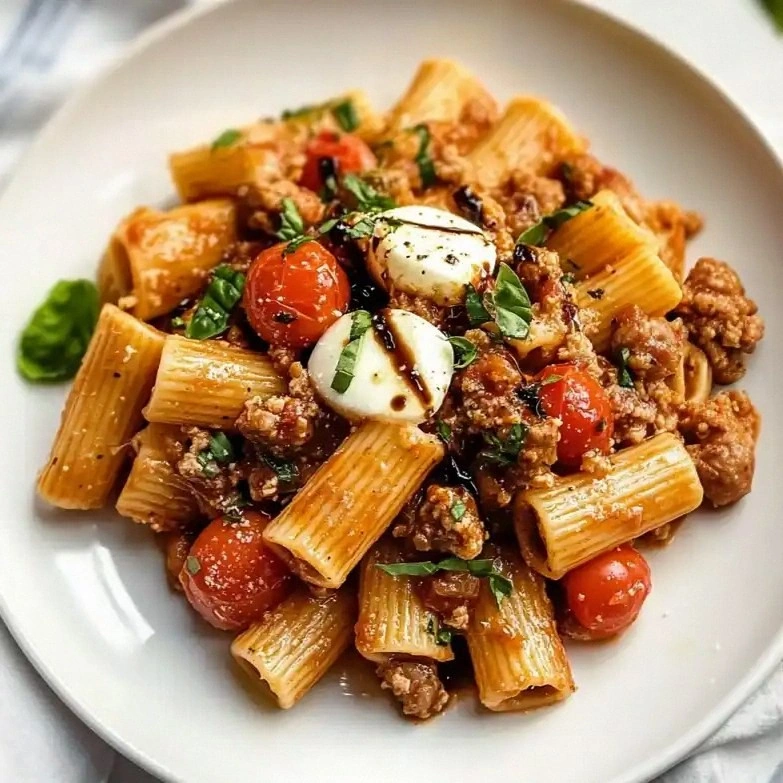
- Visual Appeal: The bright red tomatoes and green basil leaves create a color palette that’s as eye‑catching as it is appetizing. The glossy glaze gives the dish a restaurant‑level sheen. Every forkful looks like a work of art.
- Simplicity: With only 13 ingredients, this dish is a breeze to prepare, yet it delivers a complex flavor profile. You can whip it up in under 45 minutes, making it perfect for a busy weeknight. No fancy equipment or obscure spices are required.
- Versatility: Swap the sausage for chicken or shrimp, and the dish transforms into a new culinary adventure. Use whole‑wheat pasta for a healthier version. The recipe adapts easily to dietary preferences.
- Make‑ahead Potential: The flavors actually deepen after a night in the fridge, making it ideal for meal prep. Just reheat gently with a splash of pasta water to restore the sauce’s silkiness. It’s a practical choice for busy professionals.
- Crowd‑Pleaser: Guests rave about how the dish feels like a comforting hug wrapped in Italian sunshine. The combination of familiar ingredients with a gourmet twist keeps everyone asking for seconds. It’s guaranteed to be the highlight of any dinner.
- Ingredient Quality: Using high‑quality Italian sausage and fresh mozzarella pearls elevates the dish from ordinary to extraordinary. The choice of cherry tomatoes in season ensures natural sweetness and firm texture. The attention to detail in ingredient selection is what sets this recipe apart.
Inside the Ingredient List
The Flavor Base
Italian sausage is the heart of this dish, providing a robust, savory foundation that carries the other flavors. Choose a mix of pork and beef for a richer taste, or a spicy variety if you like a kick. Skipping the sausage would turn this into a plain Caprese, losing the depth that makes it unforgettable.
Olive oil is the silent hero that brings the flavors together, allowing the sausage to brown evenly and the onions to caramelize without sticking. Use a good extra‑virgin olive oil for a peppery finish, or a lighter oil if you prefer a subtler base. Without oil, the pan would scorch and the ingredients would cling, ruining the texture.
The onion adds sweetness and body, its layers building a complex backdrop as they soften. A small, finely diced onion ensures quick caramelization, while a larger onion would take too long and produce a mushy texture. Removing onion would leave the dish lacking a mellow, sweet undertone.
The Texture Crew
Pasta is the canvas, and choosing the right shape is essential. Fusilli or penne hold sauce better, but spaghetti works too if you prefer a classic feel. If you use dried pasta, keep a close eye on the cooking time to avoid overcooking.
Mozzarella pearls are the star of the show, offering a burst of creaminess that contrasts with the juicy tomatoes. Fresh pearls hold their shape, preventing a gooey mess, while pre‑shredded cheese can become sticky. If you’re vegan, a plant‑based mozzarella can substitute, though the texture will differ slightly.
Cherry tomatoes bring a sweet, acidic pop that balances the richness. Their small size ensures quick cooking and uniform flavor. Skipping tomatoes would strip the dish of its signature brightness.
The Unexpected Star
Red pepper flakes add a subtle heat that wakes up the palate without overpowering the delicate tomato flavor. Use them sparingly to keep the dish approachable for all ages. Too many flakes, and the dish becomes a fiery mess.
Dried oregano lends an earthy, slightly bitter note that anchors the sauce. Fresh oregano could be used, but its delicate leaves may wilt too quickly. If you’re out of oregano, a pinch of thyme can serve as a suitable substitute.
A pinch of salt and black pepper brings all the flavors together, allowing each ingredient to shine. Salt is essential for enhancing sweetness, while pepper adds a subtle heat. If you prefer low sodium, reduce the salt but keep the pepper for balance.
Reserved pasta water is a secret weapon, its starch content helping to bind the sauce to the noodles. Adding it at the right time ensures the sauce coats the pasta like velvet. Skipping pasta water can leave the sauce too thick and clumpy.
The Final Flourish
Fresh basil leaves add a burst of aromatic freshness that cuts through the richness. Tear them instead of chopping to release essential oils. If you’re out of basil, parsley can be a mild substitute.
Balsamic glaze is the finishing touch, giving a glossy sheen and a sweet acidity that lifts the dish. Drizzle it just before serving to preserve its vibrant color. Too much glaze can overwhelm the delicate balance of flavors.
Everything's prepped? Good. Let's get into the real action...
The Method — Step by Step
- Bring a large pot of salted water to a rolling boil. Add the pasta and cook according to package directions until al dente—about 8 to 10 minutes. Reserve a cup of the starchy water before draining. This liquid will later help bind the sauce. While the pasta cooks, keep an eye on the timing so everything finishes together. The aroma of boiling pasta sets the stage for a culinary symphony.
- While the pasta is cooking, heat a large skillet over medium heat. Add the tablespoon of olive oil, letting it shimmer before adding the sausage. The oil should coat the pan without smoking. As the sausage cooks, its fat renders, creating a flavorful base. Stir occasionally to break up any clumps. When the sausage is browned, it will release a savory aroma that’s almost irresistible.
- Add the diced onion to the pan with the sausage. Sauté until translucent and fragrant, about 3 to 4 minutes. The onion will soften and sweeten, creating a mellow backdrop. The sizzling sound is a cue that the base is ready. If the pan looks dry, add a splash of water to prevent sticking. The onions should not brown too dark, or they’ll taste bitter.
- Stir in the minced garlic and cook for an additional 30 seconds, just until fragrant. Garlic can burn quickly, so keep the heat moderate. The garlic will infuse the oil, sausage, and onions with a warm, aromatic note. Watch for a golden hue; that’s the sign it’s ready. This step is crucial for depth of flavor.
- Introduce the cherry tomatoes, salt, pepper, red pepper flakes, and oregano. Cook, stirring occasionally, until the tomatoes soften and burst—about 5 to 7 minutes. The sauce should thicken slightly and release juices. Watch carefully; if you let them cook too long, they’ll become mushy. This is the trickiest step—keep the heat steady. The tomatoes’ bright color will brighten the dish.
- Add the mozzarella pearls and stir gently until they begin to melt and coat the pan. The cheese should form small, glossy pockets that melt into the sauce. Don’t overcook the cheese, or it will become stringy. The pearls should stay intact, providing a pleasant contrast. This step creates a luxurious, creamy texture that elevates the dish.
- Drain the pasta and add it directly to the skillet, tossing to coat with the sauce. Pour in the reserved pasta water, a tablespoon at a time, until the sauce reaches a silky consistency. The pasta should be glossy and each strand should be coated. If the sauce is too thick, add more water; if too thin, let it reduce a bit. This blending is where the dish truly comes together.
- Finish with the fresh basil leaves, a drizzle of balsamic glaze, and a final sprinkle of salt and pepper. Toss everything together, ensuring the basil is evenly distributed. The glaze will give a glossy sheen and a sweet tang. The basil’s aroma will lift the dish, making it feel fresh. Serve immediately for the best texture.
- Plate the pasta in shallow bowls, allowing the sauce to pool slightly. Garnish with extra basil or a light dusting of grated Parmesan if desired. The presentation should be inviting, with bright colors and a glossy finish. Take a moment to admire the dish before diving in. This final touch makes the dish feel like a restaurant‑grade creation.
That's it — you did it. But hold on, I've got a few more tricks that'll take this to another level...
Insider Tricks for Flawless Results
The Temperature Rule Nobody Follows
Cooking the sausage at the right temperature is key; too high and it will burn, too low and it will stay greasy. Start at medium heat and let it brown slowly, allowing the fat to render and the flavors to develop. Keep the skillet uncovered to avoid steaming. This slow approach creates a caramelized crust that adds depth. If you’re in a rush, a quick sear followed by a low simmer works, but the flavor will be less complex.
Why Your Nose Knows Best
The aroma of the sautéed onions and garlic is a reliable indicator that the base is ready. A sweet, caramelized scent means the onions are soft and the garlic is fragrant. If the smell leans toward burnt, lower the heat and let it simmer. Trusting your nose will save you from overcooking or underseasoning. This sensory cue is especially useful for novice cooks.
The 5-Minute Rest That Changes Everything
After combining the pasta and sauce, let the dish rest for 5 minutes off the heat. This allows the pasta to absorb the sauce, creating a more cohesive texture. The resting period also lets the flavors meld together, enhancing the overall taste. Many cooks skip this step, resulting in a dish that feels disjointed. Give it a minute, and the difference is palpable.
The Pasta Water Trick
The starchy pasta water is essential for achieving a silky sauce. It acts as a binder, helping the sauce cling to each noodle. Add it gradually, tasting as you go, until the sauce reaches your desired consistency. If the sauce becomes too thick, a splash of water will fix it. This trick is a staple of professional kitchens.
The Cheese Timing Secret
Adding the mozzarella too early can cause it to become gummy. Wait until the tomatoes are almost done before introducing the cheese. This timing ensures the pearls melt into pockets rather than turning into a gooey mess. A quick stir will distribute the cheese evenly. The result is a creamy, luxurious texture that doesn’t compromise the dish’s integrity.
Creative Twists and Variations
The Mediterranean Twist
Swap the Italian sausage for grilled halloumi cubes and add kalamata olives for a briny kick. The cheese will add a firm texture, while the olives bring a salty depth. This variation is perfect for a light, summery dinner. Serve with a side of crusty bread to soak up the sauce.
The Spicy Kick
Increase the red pepper flakes to a tablespoon and add a dash of cayenne pepper. The heat will dance across the palate, balancing the sweet tomatoes. Pair with a chilled glass of rosé to cool the mouth. This version is ideal for those who love a fiery bite.
The Vegetarian Delight
Omit the sausage entirely and replace it with sautéed mushrooms or roasted eggplant. The umami from the mushrooms will mimic the richness of meat. This dish becomes a hearty, plant‑based main. Add a sprinkle of nutritional yeast for a cheesy note.
The Seafood Surprise
Replace the sausage with shrimp or scallops, cooking them to perfection before adding the tomatoes. The seafood will bring a delicate sweetness that pairs beautifully with the basil. This variation is quick, taking only a few minutes to cook the shrimp. It’s a great way to elevate a simple pasta into a gourmet meal.
The Gluten‑Free Option
Use a gluten‑free pasta like rice or quinoa pasta. The texture will differ slightly, but the sauce will still cling beautifully. Adjust the cooking time according to package instructions. This version is perfect for those with celiac disease or gluten sensitivities.
Storing and Bringing It Back to Life
Fridge Storage
Store the dish in an airtight container for up to 3 days in the refrigerator. Keep the sauce and pasta separate if possible, adding a splash of water when reheating to restore moisture. The flavors will mellow, making it even more savory. Avoid overcooking the pasta during reheating, or it will become mushy.
Freezer Friendly
Freeze the dish in a freezer‑safe container for up to 2 months. Thaw overnight in the fridge before reheating. If you freeze the sauce separately, combine it with the pasta just before serving. The texture remains firm, and the sauce stays silky when reheated.
Best Reheating Method
Reheat gently in a skillet over low heat, adding a splash of pasta water or broth to loosen the sauce. Stir frequently to prevent sticking. Heat until steaming, but avoid boiling, which can separate the sauce. Serve immediately for the best texture. A quick touch of fresh basil before serving will brighten the dish.