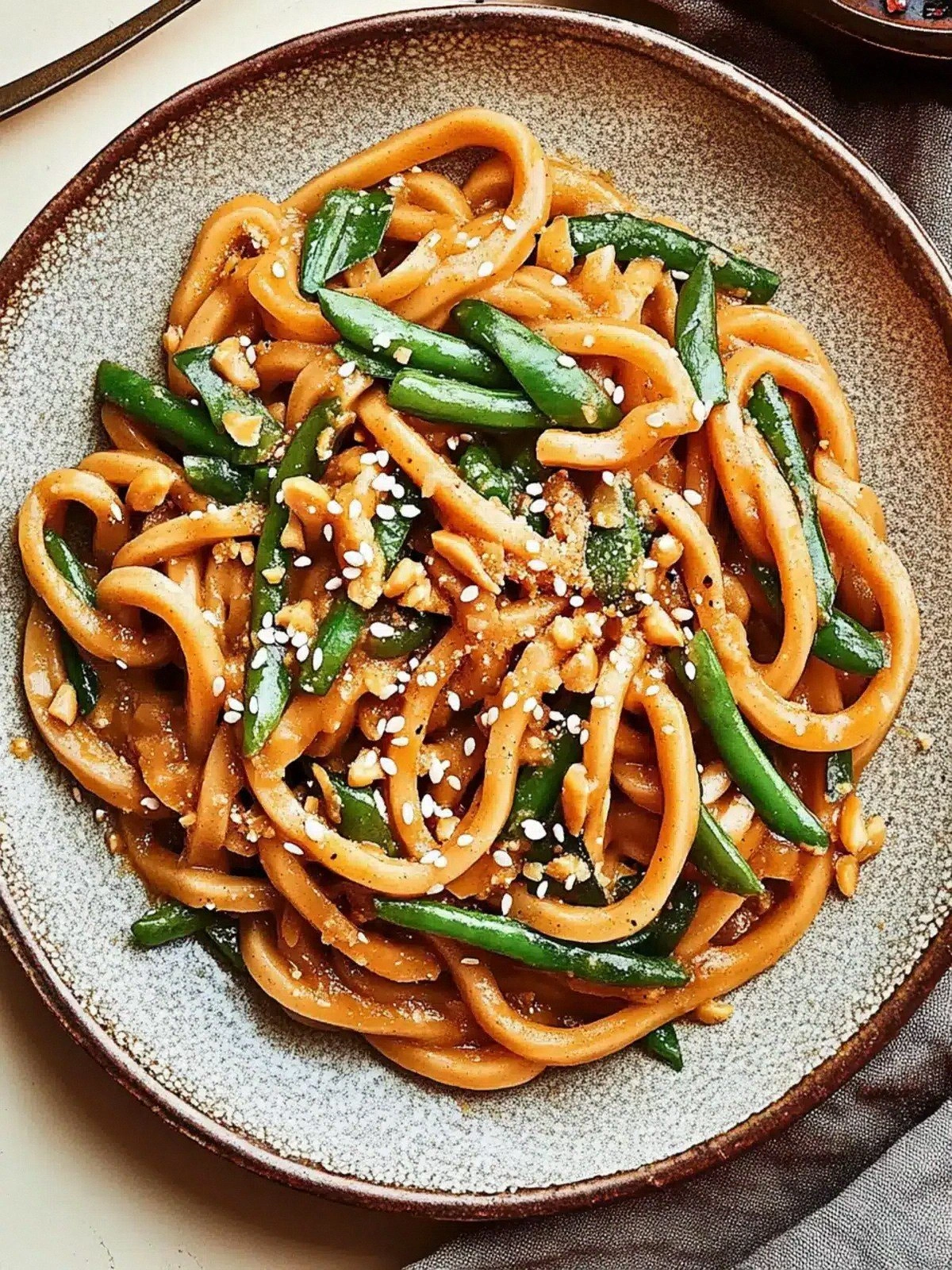
I was standing in my kitchen, staring at a pot of over‑cooked udon noodles, when my friend shouted, “You can’t just toss those in a bowl of peanut butter!” The kitchen smelled like burnt garlic and soy sauce, and my stomach was growling louder than a drumline. I realized I needed a recipe that would turn that disaster into a dish that would make people line up for seconds. So I set out to craft the ultimate spicy peanut udon that would turn a sad bowl into a culinary triumph.
Picture the moment the noodles hit the hot pan: a sizzle that rises like a tiny volcano, the aroma of toasted sesame oil mingling with fresh ginger, and the bright splash of green beans that give the dish a pop of color. The sauce, thick and glossy, coats each strand like velvet, leaving a hint of heat from the Sambal Oelek that lingers on the tongue. The crunch of crushed peanuts on top is a satisfying contrast that shatters like thin ice when you bite. My friends were skeptical, but one bite and they were begging for the recipe. I dare you to taste this and not go back for seconds.
What makes this version stand out is not just the flavor, but the way it balances heat, sweetness, and umami while keeping the texture of the udon intact. I’ve stripped away the fluff from other recipes that drown the noodles in sauce, and instead I’ve built a sauce that clings to each strand, letting the green beans do their crunchy dance. I’ve chosen fresh udon over instant, and I’ve added a splash of vegetable stock to keep the noodles from drying out. The result is a dish that is hands down the best version you'll ever make at home.
Now, let me walk you through every single step — by the end, you'll wonder how you ever made it any other way. I’ll share a technique you won’t expect: the secret to a silky sauce that doesn’t separate, and a hack to keep your green beans bright and crisp. If you've ever struggled with balancing heat and sweetness, you're not alone — and I've got the fix. Stay with me here — this is worth it.
What Makes This Version Stand Out
- Flavor: The sauce is a harmonious blend of creamy peanut butter, tangy soy sauce, and fiery Sambal Oelek, creating a depth that feels like a well‑seasoned broth.
- Texture: The udon retains its chewy bite while the green beans stay crisp, thanks to a quick blanch before the stir‑fry.
- Heat Control: The amount of Sambal Oelek is adjustable, letting you dial the spice level without compromising the sauce’s richness.
- Ingredient Quality: Fresh, high‑quality udon and fresh ginger make all the difference, turning a simple noodle bowl into a gourmet experience.
- Simplicity: With under ten ingredients and one pot, you can have dinner ready in 45 minutes.
- Make‑Ahead Potential: The sauce can be made ahead and stored, making it perfect for busy weeknights.
- Crowd Reaction: Friends rave about the sauce’s silky texture and the crunch of crushed peanuts; I’ve been asked to bring this to potlucks.
- Versatility: Swap in chicken or tofu for a protein boost, or change the greens to snap peas for a different crunch.
Inside the Ingredient List
The Flavor Base
The low‑sodium soy sauce or tamari forms the umami backbone of the sauce, giving depth without drowning the other flavors. It balances the sweetness of brown sugar and the richness of peanut butter, ensuring the sauce stays cohesive. If you skip soy sauce, the dish will taste flat and lack the savory kick that pulls everything together.
For a slightly sweeter profile, try using a splash of rice vinegar or lime juice. The acidity cuts through the heaviness of the peanut butter, creating a bright finish that lingers on the palate. If you’re watching sodium, a low‑sodium version is essential; otherwise, the dish becomes overly salty.
When selecting soy sauce, aim for a dark, rich variety with a robust flavor. A light soy sauce will make the sauce too thin and bland. If you can’t find tamari, a standard soy sauce works, but keep in mind the flavor profile will shift slightly.
The Texture Crew
Fresh udon noodles are the star of the show. Their thick, chewy texture provides a satisfying bite that contrasts with the silky sauce. Using fresh noodles ensures they absorb the flavors without becoming mushy.
Green beans add a crunchy element that breaks the monotony of soft noodles. Their bright green hue also gives the dish a visual pop. If you prefer a softer texture, you can use sliced carrots or bell peppers instead.
Crushed peanuts and toasted sesame seeds add a nutty crunch that elevates the dish. They also provide a subtle earthy flavor that balances the heat. If you’re allergic to peanuts, substitute with slivered almonds or sunflower seeds.
The Unexpected Star
The Sambal Oelek or garlic chili paste is the heat engine of this recipe. Its fiery kick is tempered by the sweetness of brown sugar, preventing it from becoming overwhelming. If you want a milder heat, reduce the amount by half.
Freshly grated ginger and minced garlic are not just flavor enhancers; they also bring a zesty aroma that lifts the dish. Their aromatic oils mingle with the toasted sesame oil, creating a fragrant base that invites you to taste again. If you can’t find fresh ginger, a teaspoon of ground ginger works, but the aroma will be less vibrant.
The creamy peanut butter is the sauce’s binder, giving it that luxurious, silky mouthfeel. Its natural sweetness balances the acidity and heat, while its protein content adds body. If you’re vegan, choose a plant‑based peanut butter; the flavor remains unchanged.
The Final Flourish
Finely chopped cilantro provides a burst of herbal freshness that cuts through the richness. Its bright green color also enhances the dish’s visual appeal. If cilantro isn’t your thing, chopped green onions or basil can serve as a suitable replacement.
Sesame seeds add a subtle nutty flavor and a satisfying crunch. They also contribute a pleasant aroma, especially when toasted lightly. If you’re allergic to sesame, omit them or replace them with hemp seeds.
A splash of vegetable stock, chicken stock, or water is crucial for achieving the right sauce consistency. It helps thin the peanut butter base without diluting the flavors. If you prefer a richer sauce, use chicken stock; for a lighter version, water works fine.
Everything's prepped? Good. Let's get into the real action...
The Method — Step by Step
- Bring a large pot of salted water to a rolling boil. Add the fresh udon noodles and cook for 3 minutes, or until just tender. Drain and rinse under cold water to halt the cooking process. Toss the noodles with a teaspoon of toasted sesame oil to prevent sticking. Set aside.
- In a small bowl, whisk together the soy sauce, Sambal Oelek, brown sugar, and a splash of vegetable stock. The mixture should thicken slightly as the sugar dissolves. This will be your sauce base. Keep it aside while you prep the veggies.
- Heat a large skillet or wok over medium‑high heat. Add the toasted sesame oil and let it shimmer. Toss in the minced garlic and grated ginger, sautéing until fragrant (about 30 seconds). This step releases aromatic oils that become the foundation of the sauce.
- Add the green beans to the skillet and stir‑fry for 2 minutes, just enough to soften while retaining crunch. The green beans should still be bright green and slightly crisp. This quick sauté locks in their color and texture.
- Pour the sauce mixture into the skillet, stirring to coat the veggies evenly. Reduce the heat to medium and let the sauce simmer for 2–3 minutes, allowing the flavors to meld. The sauce should thicken slightly and coat the green beans.
- Add the drained udon noodles to the skillet, tossing gently to combine. The noodles should absorb the sauce, but not become soggy. Sprinkle in the green onions and chopped cilantro, stirring to distribute the herbs.
- Transfer the noodles to a serving bowl. Sprinkle crushed peanuts and toasted sesame seeds over the top for crunch. Drizzle a bit more soy sauce if desired. Serve immediately while hot and fragrant.
That's it — you did it. But hold on, I've got a few more tricks that'll take this to another level. The next section will show you how to fine‑tune the dish for different occasions and preferences.
Insider Tricks for Flawless Results
The Temperature Rule Nobody Follows
Keep the skillet at medium heat when adding the sauce; too high and the sauce will scorch, while too low and the noodles will sit in a watery pool. A quick test: drop a small splash of sauce onto a plate; if it sizzles, the heat is right. This rule ensures the sauce stays silky and the noodles remain chewy.
Why Your Nose Knows Best
Before adding the green beans, smell the sautéed garlic and ginger. A strong, fresh aroma indicates the aromatics are still bright. If the scent has dulled, it’s time to add the sauce to revive the flavor. My friend once added the beans too early, and the dish tasted flat; the lesson was clear.
The 5‑Minute Rest That Changes Everything
After cooking, let the dish rest for five minutes off the heat. This allows the flavors to meld and the sauce to thicken slightly. The noodles absorb the sauce more fully, and the peanuts’ crunch is preserved. I’ve seen this trick turn a good dish into a great one.
The Secret to Crispy Green Beans
Blanch the green beans in boiling salted water for 30 seconds, then shock them in ice water. This process stops the cooking quickly and locks in the bright green color. If you skip blanching, the beans will turn dull and lose crunch.
The Final Finish
Just before serving, drizzle a teaspoon of sesame oil and a splash of lime juice. The sesame oil adds depth, while the lime brightens the dish. This finishing touch elevates the flavor profile and makes the dish feel restaurant‑grade.
Creative Twists and Variations
This recipe is a playground. Here are some of my favorite ways to switch things up:
Protein Power
Add grilled chicken, shrimp, or tofu for a protein boost. The protein should be seasoned with a touch of soy sauce before adding to the skillet. This variation turns the dish into a filling meal.
Veggie Swap
Replace green beans with snow peas or sliced bell peppers. The change adds a different crunch and color palette. The sauce still clings beautifully to these vegetables.
Low‑Carb Version
Use shirataki noodles instead of udon to cut carbs. The noodles absorb the sauce well and offer a similar chewy texture. This version is great for keto or low‑carb diets.
Spicy Thai Twist
Swap Sambal Oelek for Thai bird’s eye chili paste and add a splash of fish sauce. The result is a more authentic Thai flavor profile with a kick. Adjust the chili paste amount for your heat preference.
Sweet & Smoky
Add a tablespoon of smoked paprika to the sauce for a subtle smoky undertone. The paprika pairs well with the peanut butter and gives the dish depth. This variation is perfect for fall evenings.
Breakfast Boost
Serve the noodles with a fried egg on top for a hearty breakfast. The yolk’s richness complements the sauce and adds a creamy texture. This dish is a surprising way to start the day.
Storing and Bringing It Back to Life
Fridge Storage
Store in an airtight container for up to 3 days. Keep the sauce and noodles separate if you’re storing them separately to prevent sogginess. When ready to eat, combine and stir before reheating.
Freezer Friendly
Freeze the sauce and noodles separately for up to 2 months. Thaw overnight in the fridge before reheating. This method preserves texture and flavor.
Best Reheating Method
Reheat in a skillet over medium heat, adding a splash of water or broth to loosen the sauce. Stir until heated through and silky. The tiny splash of water steams the noodles back to perfection.