Picture this: I was standing in the middle of my kitchen, staring at a pile of short ribs that looked like a crime scene—tender, flavorful cuts that had somehow ended up in the freezer. I had promised myself a week of culinary adventure, but the last time I tried slow‑cooking ribs, the result was dry, over‑seasoned, and frankly, a disappointment. That night, I was craving comfort food that would melt on my tongue and fill the house with the aroma of slow‑cooked beef. So I pulled out my trusty slow cooker, grabbed a handful of fresh herbs, and decided to rewrite the rules.
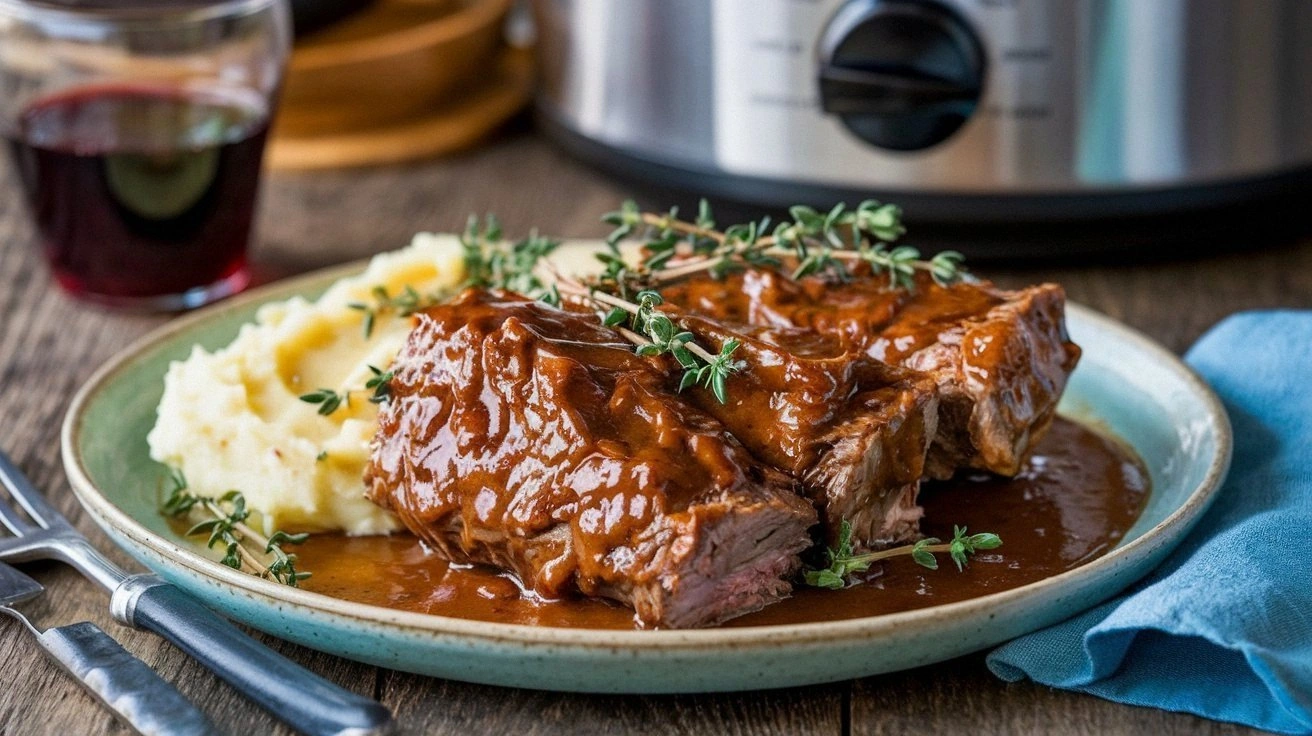
The first thing that hits you when you open the slow cooker is the deep, earthy scent of browned onions and garlic, the subtle sweetness of caramelized carrots, and a whisper of red wine that hints at a richer sauce. The sound of the bubbling liquid is like a gentle lullaby, and the sight of the ribs, browned to a perfect mahogany, makes you almost forget you’re cooking. When you finally cut into one, the meat shreds effortlessly, releasing a burst of savory juices that coat the pan like velvet. The texture is a contrast of silky meat against the slight crunch of the vegetables, and the first bite is a warm hug wrapped in umami. If you’ve ever struggled to get short ribs that stay tender after a long cook, you’re not alone — and I’ve got the fix.
What sets this version apart is that it’s not just about slow cooking; it’s about building layers of flavor from the moment you brown the meat to the final flourish of fresh parsley. I dare you to taste this and not go back for seconds. The sauce thickens naturally from the flour dusting, and the subtle hint of brown sugar balances the acidity of the wine and tomatoes. The result is a dish that feels like a gourmet restaurant experience but is entirely homemade. It’s hands down the best version you’ll ever make at home.
There’s a little secret ingredient that most recipes ignore—brown sugar. It’s the unsung hero that caramelizes into a glossy glaze, giving the sauce depth and a touch of sweetness that cuts through the richness. And the best part? You can pull this out of the slow cooker and serve it over mashed potatoes, polenta, or even a simple bed of sautéed greens. Let me walk you through every single step—by the end, you’ll wonder how you ever made it any other way.
What Makes This Version Stand Out
- Flavor: The combination of red wine, tomato paste, and Worcestershire sauce creates a complex, savory base that deepens with every hour of cooking.
- Texture: The meat becomes fall‑apart‑in‑your‑mouth tender, while the vegetables retain a subtle bite that adds contrast.
- Ease: All the work is done upfront—browning the meat and sautéing the aromatics—after which the slow cooker takes over.
- Time Efficiency: With a 6‑hour low setting, you can set it in the morning and return to a ready‑to‑serve dinner.
- Crowd‑pleaser: Whether it’s a family dinner or a potluck, this dish guarantees rave reviews.
- Ingredient Quality: Using fresh, high‑quality beef and herbs ensures the sauce never feels artificial or thin.
- Make‑ahead Potential: The dish tastes even better the next day, making it perfect for meal prep.
- Versatility: The sauce can be reduced further for a thicker gravy or left looser for a more stew‑like consistency.
Alright, let's break down exactly what goes into this masterpiece…
Inside the Ingredient List
The Flavor Base
At the heart of this dish is a classic mirepoix—onions, carrots, and celery—that forms the aromatic foundation. The onions release sweetness when browned, while the carrots add subtle earthiness and the celery brings a mild, peppery note. Together they create a savory backdrop that balances the richness of the short ribs. If you skip this step, the sauce will feel flat and lack depth.
The Texture Crew
Short ribs are the star of the show, but their texture depends on how you handle them. Pat them dry, then season generously with salt and pepper before dredging in flour. The flour not only helps the meat brown but also provides a silky coating that traps juices during the slow cook. If you skip the flour, the sauce may be thin and the meat might release too much liquid.
The Unexpected Star
Brown sugar is the unexpected star that many overlook. It caramelizes during the initial sear, adding a subtle sweetness that balances the acidity of the wine and tomato paste. This sweet‑savory profile makes the sauce feel luxurious without any artificial sweeteners. If you’re watching sugar, you can reduce the amount or substitute with a sugar‑free sweetener, but the flavor will shift slightly.
The Final Flourish
Fresh herbs—thyme and bay leaf—infuse the broth with aromatic complexity. A splash of Worcestershire sauce adds umami depth, while a dash of red wine brings acidity and richness. Butter, added at the end, gives the sauce a silky sheen and rounds out the flavors. If you prefer a vegan version, replace the butter with a tablespoon of olive oil and add a splash of soy sauce for umami.
Everything's prepped? Good. Let's get into the real action…
The Method — Step by Step
- Prep the Meat: Pat the short ribs dry with paper towels; this helps achieve a beautiful sear. Season both sides with salt and pepper, then dust lightly with flour, shaking off any excess. This flour coating will form a savory crust and help thicken the sauce later. Let the ribs rest for a few minutes while you heat the pan.
- Sear the Ribs: Heat 2 tablespoons of olive oil in a large skillet over medium‑high heat. Add the ribs in batches, browning each side until a deep mahogany crust forms—about 3–4 minutes per side. The searing step locks in juices and adds a depth of flavor that a slow cooker alone can’t achieve. Remove the ribs and set aside; they’ll re‑enter the pot later.
- Sauté Aromatics: In the same skillet, reduce heat to medium. Add the diced onion, carrot, and celery, sautéing until the onions become translucent and the vegetables start to soften—around 5 minutes. Stir in the minced garlic and cook for an additional minute until fragrant. The sautéed mirepoix builds a complex flavor base for the sauce.
- Deglaze: Pour in 1 cup of red wine, scraping the bottom of the skillet with a wooden spoon to loosen the caramelized bits. Let the wine reduce by half, concentrating the flavor. This deglazing step ensures every savory note from the pan ends up in the sauce.
- Build the Sauce: Transfer the skillet contents to the slow cooker. Add 2 cups of beef broth, 2 tablespoons of tomato paste, 2 teaspoons of Worcestershire sauce, 1 teaspoon of brown sugar, 1 bay leaf, and 2 sprigs of fresh thyme. Stir everything together until the tomato paste is fully incorporated. This mixture will simmer around the ribs, infusing them with deep, savory flavor.
- Cook: Place the browned ribs back into the slow cooker, nestling them among the vegetables. Cover and cook on low for 6 hours, or on high for 3 hours. The slow, low heat breaks down the collagen, turning the meat into melt‑in‑your‑mouth tenderness. Check periodically to ensure the liquid hasn’t evaporated; add a splash of water if necessary.
- Finish the Sauce: When the ribs are tender, remove them and set aside. Turn the slow cooker to high and let the sauce reduce for about 20 minutes, stirring occasionally. If the sauce is too thin, whisk in 1 tablespoon of butter to create a glossy finish. Taste and adjust seasoning with salt and pepper.
- Serve: Return the ribs to the pot, spooning sauce over them. Garnish with freshly chopped parsley for a pop of color and brightness. Pair with mashed potatoes, polenta, or a crisp green salad. The result is a dish that feels like a warm hug in a bowl.
That's it — you did it. But hold on, I've got a few more tricks that'll take this to another level...
Insider Tricks for Flawless Results
The Temperature Rule Nobody Follows
Most people think the slow cooker will do everything, but the key is the temperature. Cooking on low for 6 hours ensures the collagen breaks down slowly, giving the meat a silky texture. If you’re in a rush, high for 3 hours works, but the result will be slightly chewier. A quick test: pull a rib, cut into it, and feel the meat—if it feels like a piece of gelatin, you’re done.
Why Your Nose Knows Best
Before you even taste the sauce, sniff it. A good, rich slow‑cooked sauce will smell like a forest floor after rain—earthy, slightly sweet, and deeply savory. If it smells too acidic or burnt, adjust the seasonings or reduce the cooking time. Trust your nose; it’s a better judge of flavor than your tongue.
The 5-Minute Rest That Changes Everything
After pulling the ribs out of the slow cooker, let them rest for 5 minutes. This allows the juices to redistribute, keeping the meat moist. If you cut into them immediately, the juices will escape, leaving the meat dry. The rest period is the secret to that melt‑in‑your‑mouth texture.
Reduce the Sauce for a Richer Flavor
Once the ribs are done, turn the cooker to high and let the liquid reduce for 20 minutes. This concentrates the flavors and thickens the sauce. If you prefer a thicker gravy, whisk in a tablespoon of cornstarch dissolved in cold water and stir until it thickens.
Make-Ahead Magic
These ribs taste even better the next day because the flavors have had time to marry. Store them in an airtight container in the fridge for up to 3 days. Reheat gently on the stove or in the microwave, adding a splash of beef broth to keep them moist.
Creative Twists and Variations
This recipe is a playground. Here are some of my favorite ways to switch things up:
Asian Flair
Swap the red wine for 1 cup of soy sauce and add 2 tablespoons of hoisin sauce. Toss in a handful of sliced bamboo shoots and a dash of sesame oil at the end. The result is a sweet, savory, umami‑rich dish that pairs beautifully with jasmine rice.
Spicy Kick
Add a crushed red pepper flake to the mirepoix and a tablespoon of chili paste. Finish with a splash of lime juice to brighten the heat. This version is perfect for those who love a fiery twist.
Herb‑Infused Variation
Replace thyme with rosemary and add a handful of fresh sage. The aromatic herbs give the sauce a piney, earthy flavor that complements the beef’s richness.
Vegetarian Swap
Use seared portobello mushrooms in place of short ribs, and replace beef broth with vegetable broth. The mushrooms soak up the sauce, creating a hearty, plant‑based main that still feels indulgent.
Gluten‑Free Option
Use a gluten‑free flour blend for dredging and a gluten‑free soy sauce. The dish remains hearty and flavorful while meeting dietary needs.
Storing and Bringing It Back to Life
Fridge Storage
Cool the ribs and sauce completely before transferring to an airtight container. Store in the refrigerator for up to 3 days. The meat will keep its tenderness, and the sauce will deepen in flavor.
Freezer Friendly
For longer storage, freeze the ribs and sauce separately in freezer bags. They can be kept for up to 3 months. Thaw overnight in the fridge before reheating.
Best Reheating Method
Reheat on the stovetop over low heat, adding a splash of water or broth to keep the sauce from drying out. Stir frequently until heated through. The tiny splash of water before reheating steams the meat back to perfection.