Picture this: I’m standing in my cramped kitchen, a half‑cooked pot of bland broth on the stove, and a friend at the door with a craving for something that feels like a hug and a kick all at once. I’m thinking, “I’ll just throw something in there.” I open the fridge, toss in some beef, a splash of coconut milk, a handful of peanuts, and, oh, a secret ingredient that turns the whole thing into a flavor explosion. The result? A bowl of Satay Beef Noodle Soup that made my friend’s eyes widen so hard it looked like they’d seen a ghost. That moment was the spark that ignited this recipe, and it’s the reason I’m writing about it with the enthusiasm of a food‑obsessed friend who just discovered the ultimate version of a dish and can’t wait to share every detail.
If you’ve ever stared at a pot of plain broth and wondered why it’s not a masterpiece, this is for you. I’m talking about a soup that smells of toasted lemongrass and sweet peanut sauce, tastes like a silky, umami‑laden hug, and feels like a comforting hug that’s also a bit of an adventure. The first spoonful will make you feel the subtle heat of chilies, the creamy richness of coconut milk, and the bright zing of lime—like a symphony that starts with a gentle crescendo and ends with a triumphant finale. And the texture? Imagine rice noodles that are al dente, bean sprouts that snap with a satisfying crunch, and tender beef that melts in your mouth. The combination of flavors and textures is so harmonious that it’s almost unfair to your taste buds.
What sets this version apart from every other Satay Beef Noodle Soup you’ve tried or read about is the balance of boldness and subtlety. The peanut sauce is not sweet or salty—it's a complex, layered profile that has a whisper of citrus, a hint of spice, and a velvety finish that coats the noodles like velvet. The broth is light yet rich, thanks to a careful layering of coconut milk, lemongrass, and galangal. And the beef is marinated to perfection, so it’s juicy and infused with the sauce. I dare you to taste this and not go back for seconds—once you taste this, you’ll never settle for a bland broth again.
I’m not going to keep you waiting. Let me walk you through every single step—by the end, you’ll wonder how you ever made it any other way. The techniques I’ll share will feel like secret sauce that you can use for all your noodle soups, and the ingredients are surprisingly easy to find. Trust me, you’ll be shouting “This is hands down the best version you’ll ever make at home” the moment you finish the first bowl.
What Makes This Version Stand Out
- Flavor Depth: The peanut sauce is built on a foundation of toasted peanuts, fermented soy, and a splash of fish sauce, creating a savory base that’s both sweet and umami.
- Texture Contrast: Al dente rice noodles, crisp bean sprouts, and silky beef slices give each bite a layered experience.
- Ease of Prep: The recipe uses pantry staples and a simple marination that cuts down on prep time while amplifying flavor.
- Make‑Ahead Friendly: The broth can be made a day ahead and will deepen in flavor, making it perfect for busy weeknights.
- Crowd‑Pleaser: Even the pickiest eaters love the balanced heat and sweet notes—ideal for family dinners or dinner parties.
- Ingredient Quality: Fresh beef, high‑quality coconut milk, and genuine tamarind give this soup a premium feel.
- Unique Twist: The addition of kaffir lime leaves and galangal gives it an aromatic brightness that sets it apart.
- Visual Appeal: A splash of lime, a sprinkle of roasted peanuts, and a swirl of fresh cilantro make the dish Instagram‑ready.
Alright, let's break down exactly what goes into this masterpiece...
Inside the Ingredient List
The Flavor Base
The backbone of any great soup is its flavor base, and here we’re building it with a mix of aromatic herbs and spices. Lemongrass, galangal, and kaffir lime leaves are the holy trinity that give the broth its citrusy, earthy undertones. If you can’t find fresh galangal, a teaspoon of ginger powder will do, but the fresh version delivers a cleaner, more vibrant aroma. The fish sauce adds that salty umami punch that balances the sweetness of the coconut milk. Skipping the fish sauce will result in a broth that tastes flat and under‑seasoned, so keep it on hand.
When it comes to coconut milk, choose a high‑quality brand that’s full‑fat and unseasoned. The richness of the milk is what gives the soup its silky mouthfeel. If you’re watching calories, a light coconut milk works but the texture will be thinner. For a richer broth, consider adding a splash of coconut cream. The key is to let the coconut milk simmer gently so it doesn’t separate or curdle.
The Texture Crew
Rice noodles are the star of the show, and they need to be cooked just right. Overcooked noodles become mushy, while undercooked noodles feel rubbery. Aim for a gentle boil and a 3–4 minute cook time, then rinse them under cold water to stop the cooking process. This technique preserves the al dente bite that makes the soup so satisfying. If you prefer a thicker soup, you can add a small amount of tapioca starch to the broth to create a slight viscosity without altering the flavor.
Bean sprouts add a fresh crunch that contrasts beautifully with the tender beef. They also help to balance the richness of the coconut milk. If you’re a fan of a little extra texture, try adding thinly sliced carrots or julienned bell peppers. These veggies not only add color but also introduce subtle sweetness.
The Unexpected Star
The peanut sauce is where the magic happens. It’s not just peanut butter; it’s a complex blend of toasted peanuts, tamarind, palm sugar, and a hint of lime. The tamarind gives a bright acidity that cuts through the richness, while the palm sugar adds a deep caramel sweetness. If you’re short on tamarind, a splash of rice vinegar can mimic its acidity. This sauce is the secret weapon that turns an ordinary noodle soup into an unforgettable dish.
The beef itself is a key player. Marinate thin slices of sirloin or flank steak in a mixture of soy sauce, lime juice, and a touch of garlic for at least 30 minutes before cooking. This not only tenderizes the meat but also infuses it with layers of flavor. If you’re a vegetarian, you can substitute thinly sliced tofu or tempeh, marinating them in the same sauce for a plant‑based version.
The Final Flourish
The finishing touches are what elevate the dish from good to unforgettable. Fresh cilantro, sliced scallions, and lime wedges add brightness and a burst of freshness that cuts through the richness. A handful of roasted peanuts sprinkled on top provides a delightful crunch and nutty aroma. Finally, a drizzle of sesame oil just before serving adds a subtle nutty note that ties all the flavors together. If you prefer a bit of heat, a few drops of chili oil or a sprinkle of fresh chili flakes will give the soup that extra kick.
Everything's prepped? Good. Let's get into the real action...
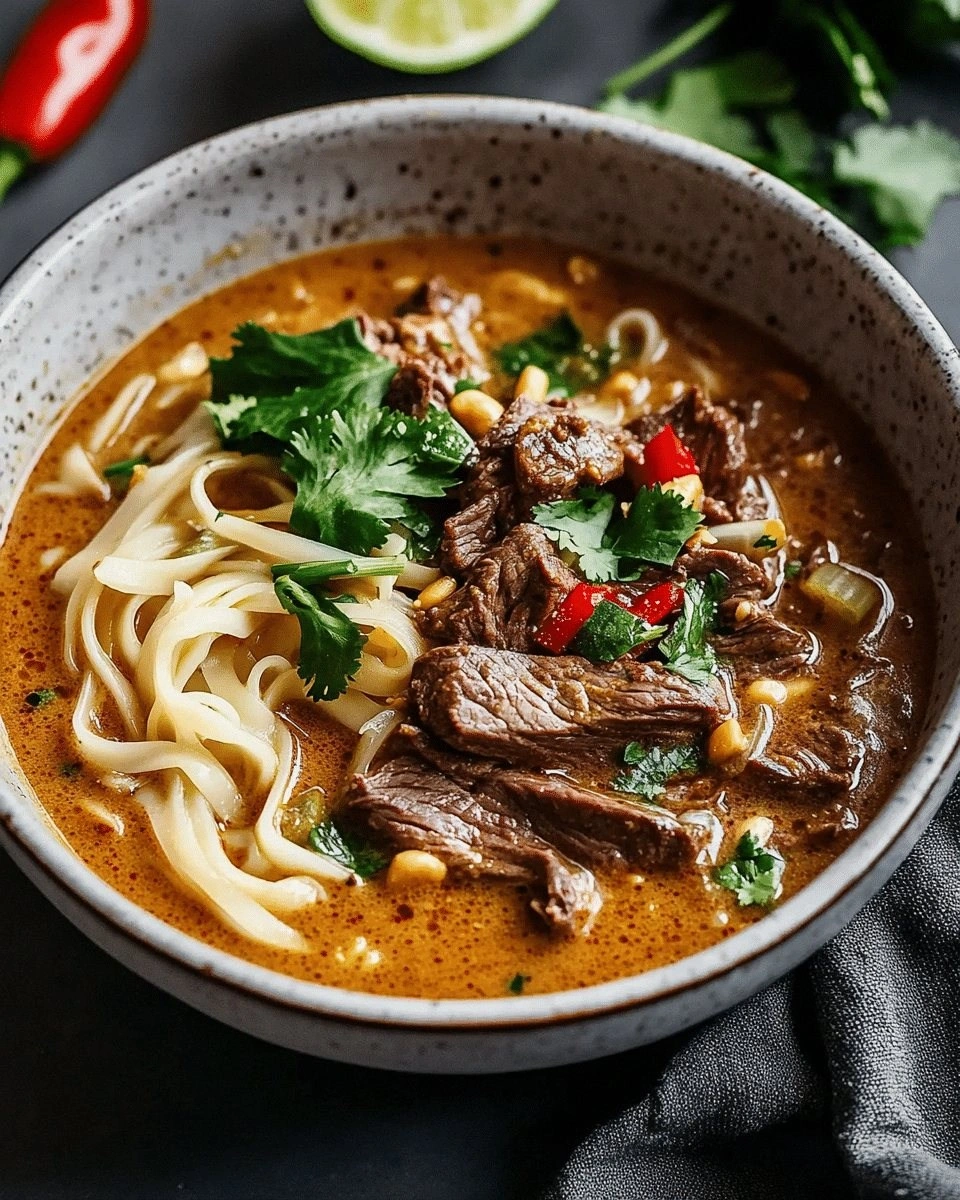
The Method — Step by Step
- Prepare the Broth: In a large pot, bring 4 cups of water to a boil. Add the lemongrass, galangal, and kaffir lime leaves, and let it simmer for 10 minutes to extract their aromas. Remove the aromatics, then stir in 2 cups of coconut milk, 2 tablespoons of fish sauce, and 1 tablespoon of palm sugar. Bring to a gentle simmer; the broth should emit a fragrant, coconut aroma that’s not overpowering.
- Marinate the Beef: While the broth simmers, toss thin slices of beef with 2 tablespoons of soy sauce, 1 tablespoon of lime juice, 1 minced garlic clove, and a pinch of black pepper. Let it rest for 20 minutes; the acid in the lime helps break down the muscle fibers, making the beef tender.
- Cook the Peanut Sauce: In a blender, combine 1 cup of roasted peanuts, 2 tablespoons of tamarind paste, 1 tablespoon of palm sugar, 1 teaspoon of soy sauce, 1 tablespoon of lime juice, 1 teaspoon of chili paste, and 1/4 cup of water. Blend until smooth, then pour into a saucepan. Simmer on low heat for 5 minutes, stirring frequently to prevent sticking. The sauce should thicken slightly and develop a glossy sheen.
- Seared Beef: Heat 1 tablespoon of vegetable oil in a wok or large skillet over high heat. Add the marinated beef in a single layer and sear for 30 seconds on each side until browned but still tender. Remove and set aside; the searing step locks in juices and gives the beef a caramelized crust.
- Cook the Noodles: Bring a separate pot of water to a rolling boil. Add 200 grams of rice noodles and cook for 3–4 minutes until al dente. Drain and rinse under cold water to stop the cooking process. Toss the noodles with a splash of sesame oil to prevent sticking.
- Assemble the Soup: Return the broth to a gentle simmer. Add the cooked noodles, bean sprouts, and seared beef. Stir in the peanut sauce, allowing the flavors to meld for 2 minutes. The soup should be fragrant and the noodles coated in the silky sauce.
- Finish with Freshness: Ladle the soup into bowls. Top with fresh cilantro, sliced scallions, a squeeze of lime, and a handful of roasted peanuts. Drizzle a few drops of sesame oil for that final aromatic touch.
- Serve Immediately: The soup is best enjoyed hot, while the noodles are still al dente and the broth is steaming. If you’re not serving right away, keep it warm in a covered pot on low heat.
That's it — you did it. But hold on, I've got a few more tricks that'll take this to another level. The next section will dive into insider tricks that ensure flawless results every time.
Insider Tricks for Flawless Results
The Temperature Rule Nobody Follows
Many cooks think you can just throw everything in and let it simmer, but temperature control is the secret sauce. Keep the broth at a gentle simmer (just below boiling) so that the flavors meld without losing the delicate notes of lemongrass and coconut. A rolling boil will evaporate the coconut milk’s richness too quickly. If you’re using a gas stove, lower the flame after the initial boil to maintain a steady, low heat.
Why Your Nose Knows Best
Your nose is a powerful guide to the soup’s readiness. When the broth smells toasty and the peanut sauce has a caramelized aroma, you’re in the right spot. If the aroma is flat, give it a few more minutes to develop. Trust your senses—taste alone won’t always tell you when the flavors are perfectly balanced.
The 5-Minute Rest That Changes Everything
After you finish cooking the beef, let it rest for 5 minutes before slicing. This small step allows the juices to redistribute, resulting in a more tender bite. A friend once skipped this rest and the beef ended up dry; that was a lesson learned the hard way. So, set the beef aside, let it rest, then slice.
Use Fresh Ginger, Not Powder
Fresh ginger gives a bright, sharp note that powder can’t replicate. If you’re short on time, you can use ginger paste, but fresh will make your broth sing. The difference is subtle yet transformative—think of it as the difference between a whisper and a shout.
Add a Splash of Water Before Reheating
When reheating leftovers, add a tablespoon of water or broth before microwaving or stovetop reheating. This trick rehydrates the noodles and prevents the coconut milk from separating. It’s a simple step that preserves the silky texture and keeps the soup from feeling dry.
Creative Twists and Variations
This recipe is a playground. Here are some of my favorite ways to switch things up:
Spicy Szechuan Twist
Replace the chili paste with Szechuan peppercorns and a dash of Sichuan sauce. The peppercorns give a numbing heat that pairs beautifully with the creamy broth. This version is ideal for those who like a bold, numbing spice.
Miso Miso‑Miso Fusion
Stir in a tablespoon of white miso into the broth for a subtle umami boost. The miso adds depth and a slightly sweet undertone that complements the peanut sauce. It’s a quick way to elevate the dish without adding extra steps.
Vegetarian Tempeh Delight
Swap the beef for thinly sliced tempeh marinated in soy sauce, lime juice, and garlic. The tempeh takes on the flavors beautifully and provides a hearty, plant‑based protein. This version is both satisfying and ethical.
Seafood Splash
Add a handful of shrimp or sliced fish fillets to the soup during the last 2 minutes of cooking. The seafood absorbs the flavors quickly and adds a delicate, sweet finish. This variation turns the dish into a seafood noodle bowl.
Coconut Curry Kick
Introduce a teaspoon of red curry paste into the broth before adding the coconut milk. The curry paste infuses the soup with a warm, aromatic heat that balances the sweetness. This version is perfect for a cozy, spicy dinner.
Herb‑Infused Finale
Finish the soup with a handful of fresh mint or basil instead of cilantro. The mint adds a refreshing coolness that contrasts with the warm broth, while basil gives a sweet, peppery finish. Experiment to find your favorite herbal note.
Storing and Bringing It Back to Life
Fridge Storage
Store the soup in an airtight container for up to 3 days in the refrigerator. Keep the noodles separate if you plan to reheat, as they can become mushy when stored together. When reheating, add a splash of water or broth to maintain the broth’s consistency.
Freezer Friendly
The soup can be frozen for up to 2 months. Portion into individual servings for convenience. Thaw overnight in the refrigerator before reheating on the stovetop or in the microwave. Add a tablespoon of water before reheating to keep the noodles from drying out.
Best Reheating Method
Reheat the soup on low heat, stirring frequently. The key is to bring it back to a gentle simmer without boiling, which can cause the coconut milk to separate. A quick splash of water or broth will restore the silky texture and keep the flavors vibrant.