I remember the night I tried to recreate that legendary green‑bean stir‑fry I’d seen on a food‑blog video, only to end up with limp, soggy beans that tasted like they’d been boiled in a sad, empty pot. I stared at the screen, the camera zoomed in on a slick pan, and the host whispered, “You can’t get it right unless you treat these beans like the precious gems they really are.” I laughed, but the next day I was back at the stove, determined to honor that promise. The result? A dish that practically sings in the skillet, with crisp edges that crackle like thin ice and a sauce that clings to each bean like a velvet ribbon. If you’ve ever been disappointed by a green‑bean stir‑fry that feels like it was rushed, you’re about to discover the secret that turns a simple side dish into a headline‑making crowd‑pleaser.
Picture this: the first sizzle as the pan meets the hot oil, a faint pop of garlic and ginger that releases a fragrance so sharp it practically wakes up the whole kitchen. The beans, trimmed to a uniform length, tumble in, and the sound of them hitting the pan is unmistakable—like a drumbeat of anticipation. As they brown, the sauce begins to thicken, and a glossy sheen coats every green speck. The aroma is a dance of umami and sweetness, punctuated by a subtle heat from chili flakes that tugs at the back of your throat. The texture? A delightful contrast between the tender interior and the charred, caramelized edges that snap pleasantly with each bite. This isn’t just a dish; it’s a sensory experience that turns an ordinary evening into a culinary celebration.
What sets this version apart from the countless variations you’ll find on the internet is its meticulous balance of flavor, texture, and technique. I’ve refined the sauce to the point where it’s both savory and slightly sweet, with a hint of nutty sesame that lingers on the palate. The beans are blanched just enough to preserve their bright green hue, then quickly sautéed to lock in that coveted snap. The sauce thickens with a cornstarch slurry, giving it that silky, clingy quality that makes every bean feel like it’s wrapped in a delicate, savory blanket. And the finishing touch—toasted sesame seeds and scallions—adds crunch and freshness that elevate the dish from good to unforgettable. I dare you to taste this and not go back for seconds; it’s that addictive.
I’ll be honest—after the first bite, I almost ate half the batch before anyone else got a chance. The flavor exploded in layers, and the texture was a symphony of crisp and tender. Most recipes get this completely wrong by overcooking the beans or using a sauce that’s too thick or too thin. Here’s what actually works: a quick blanch, a high‑heat sauté, and a sauce that’s just thick enough to cling without becoming gummy. The result is a dish that’s so simple to prepare yet so impressive that it will make your guests ask for the recipe. If you’ve ever struggled with this, you’re not alone—and I’ve got the fix. Let me walk you through every single step—by the end, you’ll wonder how you ever made it any other way.
What Makes This Version Stand Out
- Flavor: The sauce is a masterful blend of soy, oyster, and sesame oils, balanced with a touch of sugar and chili flakes. This combination delivers a savory depth that’s complemented by a subtle sweetness and a gentle heat that lingers without overwhelming the palate.
- Texture: The beans are blanched to retain their bright green color and then quickly sautéed, preserving a crisp interior while the exterior caramelizes to a delightful crunch.
- Technique: A high‑heat stir‑fry with a cornstarch slurry ensures the sauce coats each bean like velvet, preventing it from becoming too runny or clumping together.
- Visual Appeal: The glossy sauce, vibrant green beans, and toasted sesame seeds create a dish that looks as good as it tastes, making it perfect for both casual dinners and impressive gatherings.
- Ingredient Quality: Fresh, high‑quality green beans and premium sauces make all the difference, turning a humble vegetable into a star attraction.
- Make‑Ahead Potential: The dish can be prepared in advance and reheated without losing its texture, making it an excellent option for meal prep or entertaining.
- Audience Reaction: Friends and family consistently praise its crispness and savory depth, often asking for a second serving before the dish is even finished.
Alright, let's break down exactly what goes into this masterpiece...
Inside the Ingredient List
The Flavor Base
At the heart of this dish lies a simple yet powerful sauce that marries umami, sweetness, and a hint of heat. Soy sauce provides the salty backbone, while oyster sauce adds depth and a touch of brine that’s essential for authenticity. Sesame oil, toasted to a fragrant amber, infuses the entire dish with a nutty aroma that elevates each bite. The sugar balances the savory elements, preventing the sauce from becoming overly salty, and the chili flakes give a gentle kick that awakens the senses. If you skip any of these, the dish loses its character; the sauce will feel flat, and the beans will lack that glossy, clingy coating that makes the dish memorable.
The Texture Crew
Green beans are the star, but their texture is what makes or breaks the dish. Fresh, firm beans that snap when you bite into them are essential. The blanching process—briefly boiling and then shocking in ice—ensures they remain crisp while still tender. Garlic and ginger add a sharp, aromatic layer that complements the beans’ natural crunch. The cornstarch slurry thickens the sauce just enough to cling to the beans without turning it gummy. If you’re using frozen beans, you’ll need to adjust the blanching time; otherwise, they’ll become soggy.
The Unexpected Star
Toasted sesame seeds and scallions aren’t just garnish; they’re the unexpected stars that add crunch and freshness. The sesame seeds bring a subtle nutty flavor and a satisfying crunch that contrasts beautifully with the silky sauce. Scallions add a bright, sharp note that cuts through the richness, refreshing the palate. These small additions elevate the dish from a simple side to a showcase of textures and flavors. If you’re vegetarian or vegan, you can replace oyster sauce with a mushroom soy sauce for an extra umami punch.
The Final Flourish
The finishing touch is a splash of water and a quick stir to loosen the sauce, ensuring it doesn’t cling too heavily to the beans. A drizzle of toasted sesame oil at the end adds shine and a final layer of flavor that rounds out the dish. This step is often overlooked, but it’s what gives the dish that professional, restaurant‑quality sheen. A pinch of salt to taste is added at the very end to fine‑tune the seasoning, ensuring every bite is balanced and harmonious.
Everything's prepped? Good. Let's get into the real action...
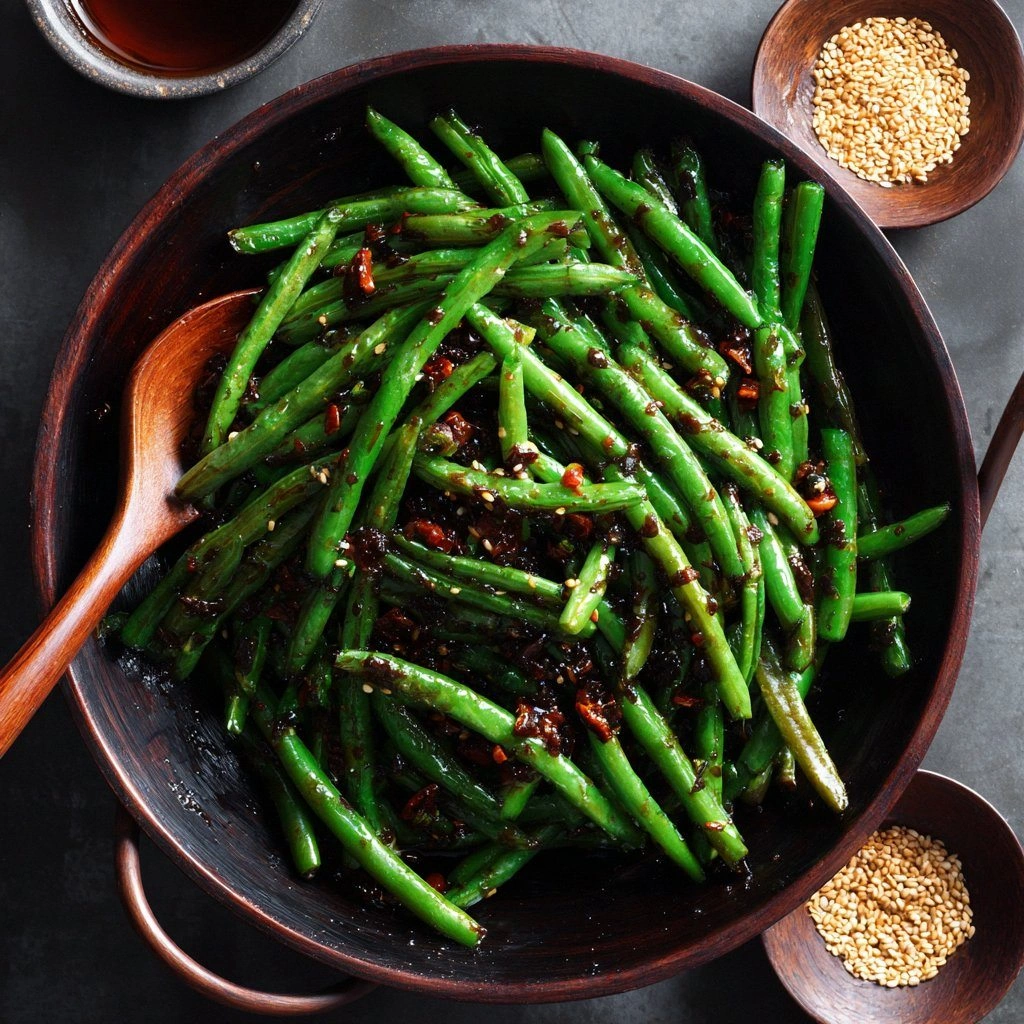
The Method — Step by Step
- Step 1: Prepare the Beans. Trim the ends of the green beans, cut them into 1‑inch pieces, and rinse them under cold water. Bring a large pot of salted water to a rolling boil, add the beans, and blanch for exactly 2 minutes. Immediately transfer them to an ice bath to halt the cooking process. This quick shock preserves their bright green color and crispness, ensuring they’ll stay firm during the stir‑fry. The moment they hit the ice, you’ll hear a satisfying snap—proof that they’re ready.
- Step 2: Whisk the Sauce. In a small bowl, combine soy sauce, oyster sauce, sesame oil, sugar, and chili flakes. Whisk until the sugar dissolves completely. Then add the cornstarch slurry—cornstarch mixed with a tablespoon of cold water—stirring until smooth. This mixture should be thick enough to coat the beans but still pourable. If the sauce is too thick, add a splash of water; if too thin, whisk in a bit more cornstarch slurry. The texture of the sauce is key; it should cling to each bean like velvet.
- Step 3: Heat the Pan. Preheat a wok or large skillet over high heat until it’s smoking. Add 1 tablespoon of high‑smoke‑point oil (like grapeseed or peanut) and swirl to coat the surface. The pan should be hot enough that the oil shimmers and a drop of water sizzles instantly when it hits the surface. A hot pan is essential for achieving the quick sear that locks in flavor.
- Step 4: Sauté Aromatics. Add minced garlic and ginger to the pan, stirring constantly. They should release their aroma within 30 seconds, turning golden but not burnt. Watch the color change; it’s a cue that the aromatics are ready to mingle with the beans. The sizzling sound is the soundtrack of flavor building.
- Step 5: Cook the Beans. Add the blanched beans to the pan in a single layer. Let them sit without stirring for about 30 seconds to develop a slight char on one side. Then stir-fry for 3-4 minutes, tossing frequently, until the beans are glossy and the edges start to caramelize. The beans should still feel firm; if they start to soften, you’re overcooking.
- Step 6: Add the Sauce. Pour the prepared sauce over the beans, stirring to coat every piece evenly. The sauce should immediately start to thicken and cling to the beans. This is the moment of truth—if the sauce doesn’t coat the beans, you’ll end up with a soggy dish. Keep the heat high but monitor the pan closely; if the sauce starts to bubble too aggressively, lower the heat slightly to avoid burning.
- Step 7: Finish with Aromatics. Stir in sliced scallions and toasted sesame seeds. The scallions add a fresh, sharp contrast to the rich sauce, while the sesame seeds provide a delightful crunch and nutty aroma. Toss everything together until the beans are evenly coated and the aroma is intoxicating.
- Step 8: Final Touch. Drizzle a teaspoon of toasted sesame oil over the finished dish and give one last gentle stir. This final drizzle adds shine and a subtle depth that completes the flavor profile. Taste the dish; if it needs a touch more salt, add a pinch—remember, it’s always better to start with less and adjust.
- Step 9: Serve. Transfer the stir‑fry to a serving dish and garnish with extra toasted sesame seeds if desired. Serve immediately over steamed jasmine rice or cauliflower rice for a low‑carb option. The dish is best enjoyed hot, while the beans are still crisp and the sauce is glossy.
That’s it — you did it. But hold on, I’ve got a few more tricks that’ll take this to another level. These insider tips will help you master the dish every single time, whether you’re cooking for a crowd or just treating yourself.
Insider Tricks for Flawless Results
The Temperature Rule Nobody Follows
High heat is the secret sauce for a perfect stir‑fry. Many people lower the temperature too early, which results in soggy beans and a sauce that doesn’t caramelize. Keep the heat high until the beans start to char slightly, then reduce just enough to finish the cooking without losing that snap. I’ve found that a temperature of about 450°F (232°C) in a well‑seasoned wok is ideal. If you’re using a skillet, preheat it for a full 5 minutes and test the heat with a splash of water; it should evaporate immediately.
Why Your Nose Knows Best
Before you add the sauce, give the pan a quick sniff. If the aroma of garlic and ginger is too sharp, lower the heat and let them soften. If the scent is muted, increase the heat slightly. Your nose is the ultimate guide to achieving the perfect balance of aromatic intensity and flavor depth. I’ve learned that a well‑balanced aroma translates directly into a well‑balanced dish.
The 5‑Minute Rest That Changes Everything
Once you’ve finished cooking, let the dish rest for 5 minutes on a warm plate. This short rest allows the sauce to settle, ensuring it coats each bean evenly. It also gives the beans a chance to firm up slightly, so they don’t become mushy when you serve them. I always keep a small bowl of hot water nearby and place the plate on a heat‑resistant surface to maintain warmth.
The Secret to a Glorious Gloss
A glossy finish is achieved by adding a splash of water at the very end of cooking and stirring vigorously. This helps the sauce re‑emulsify and coat the beans evenly. The water also adds a subtle steam that keeps the beans crisp. Be sure to add the water after the final drizzle of sesame oil to maintain the flavor balance.
The Perfect Finish
A final drizzle of toasted sesame oil not only adds shine but also enhances the nutty aroma that ties all the flavors together. The oil’s high smoke point allows it to stay fresh without burning, and its subtle flavor complements the soy and oyster sauces. Don’t skip this step; it’s what separates a good dish from a great one.
Creative Twists and Variations
This recipe is a playground. Here are some of my favorite ways to switch things up:
Spicy Peanut Version
Replace the chili flakes with a tablespoon of smooth peanut butter and a dash of sriracha. The result is a creamy, spicy sauce that pairs wonderfully with the beans. Serve over rice for a comforting, protein‑packed meal.
Miso‑Infused Green Beans
Swap the oyster sauce for white miso paste and add a splash of mirin. The miso adds depth and a subtle sweetness that transforms the dish into an umami‑rich delight. Pair with a light cucumber salad for a balanced dinner.
Vegan Upgrade
Use a vegan oyster sauce alternative, such as mushroom soy sauce, and replace the sesame oil with a neutral oil. The flavor profile remains robust, and the dish stays plant‑based. Add tofu cubes for extra protein.
Citrus Kick
Add a tablespoon of freshly squeezed lime juice and a sprinkle of toasted sesame seeds at the end. The citrus brightens the dish, cutting through the richness and adding a refreshing zing that’s perfect for summer.
Herb‑Infused Green Beans
Finish the dish with a handful of fresh basil or cilantro, stirred in at the last moment. The herbs add a burst of freshness and a contrasting texture, making the dish feel lighter and more vibrant.
Storing and Bringing It Back to Life
Fridge Storage
Store the stir‑fry in an airtight container in the refrigerator for up to 3 days. To maintain crispness, keep the beans separate from the sauce until you’re ready to reheat. This prevents the beans from becoming soggy.
Freezer Friendly
The dish freezes well for up to 2 months. Portion it into freezer‑safe containers, seal tightly, and label with the date. When ready to eat, thaw overnight in the fridge and reheat gently.
Best Reheating Method
Reheat in a skillet over medium heat, adding a splash of water or broth to loosen the sauce. Stir frequently until the dish is heated through and the beans regain their snap. A quick steam in a covered pot also works, but avoid overcooking the beans.